
How Can I Support My Autistic Child with Toileting?
Toileting readiness isn’t a checklist, it’s a process. And we’ve already learned that some young people communicate clear signs of being ready while others don’t, but it doesn’t necessarily mean that they aren’t ready. Readiness is best under stood as
a journey made up of small, gradual steps. We’re looking to build trust and
familiarity.
These steps might include:
• Helping your young person notice when they are wet or dry
• Talking aloud about your own toilet use: ‘I’m going to the loo now!’
• Supporting them to explore the bathroom or sit on the toilet with
no expectations
• Practising related skills like washing hands or pulling
trousers up and down.
One of the most powerful things you can do is normalize toileting. Young people learn what is typical by watching the people around them.
Talking openly about your own toilet habits with sayings such as ‘My tummy feels tight, I think I might need a wee’ can help your young person connect their body’s signals with the idea of going to the toilet.
Other simple examples might be: ‘I drank lots of water, now I need the loo’, or‘My body’s telling me it’s time for a poo, so I’m heading to the toilet.’ These kinds of phrases show that using the toilet is a normal, everyday part of life.
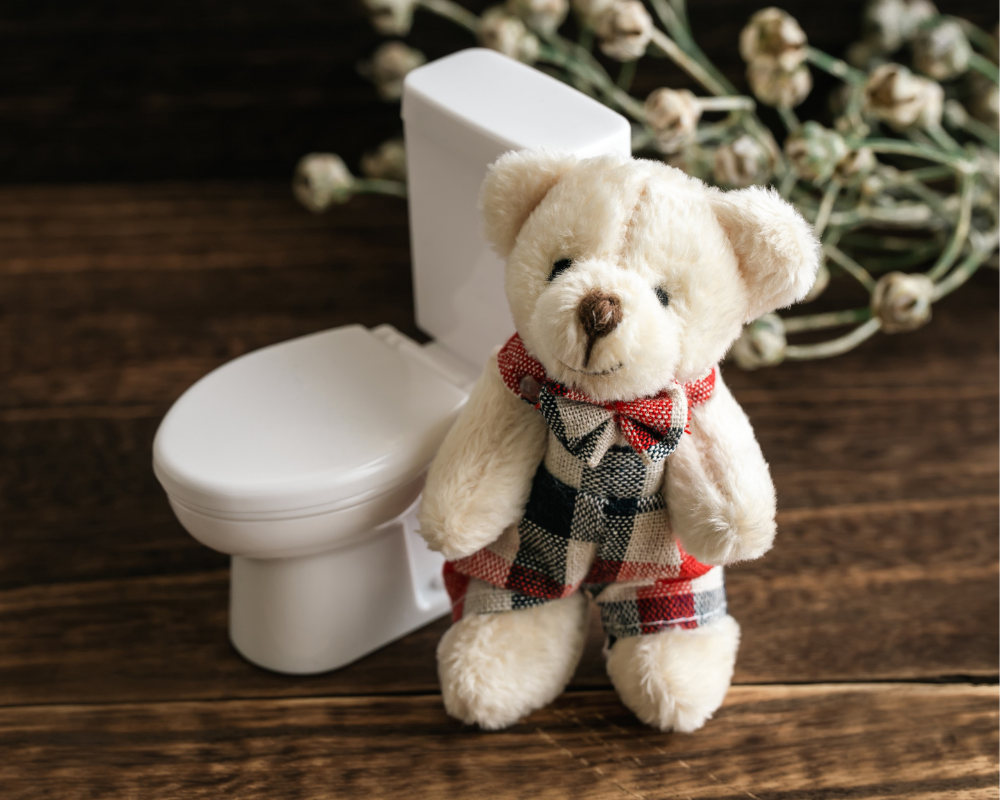
Using imaginative play to support your child with toileting
Imaginative play can also be a gentle way to rehearse the toilet ing process.
A favourite toy, doll or stuffed animal can act out the entire routine. This could be from pretending to feel the urge to go, walking to the toilet, pulling down clothes, sitting for a while, doing a wee or poo, wiping, flushing and washing hands. Your young person can be invited to direct or narrate the steps.
Or they might prefer to watch an adult model the play first. This kind of role play supports young people to explore the pro cess without pressure and helps
make the steps feel familiar before they’re expected to try them themselves.
These playful moments can reduce anxiety, especially for those who feel unsure about new routines or need time to get used to changes in their environment.
Using humour, silly voices or little songs during the play can help keep things
light and build positive associations with the routine. For some young people,
incorporating toileting into their everyday play can also support learning
through repetition and storytelling. This might look like building a bathroom
in a block house or including potty breaks in a pretend school or zoo.
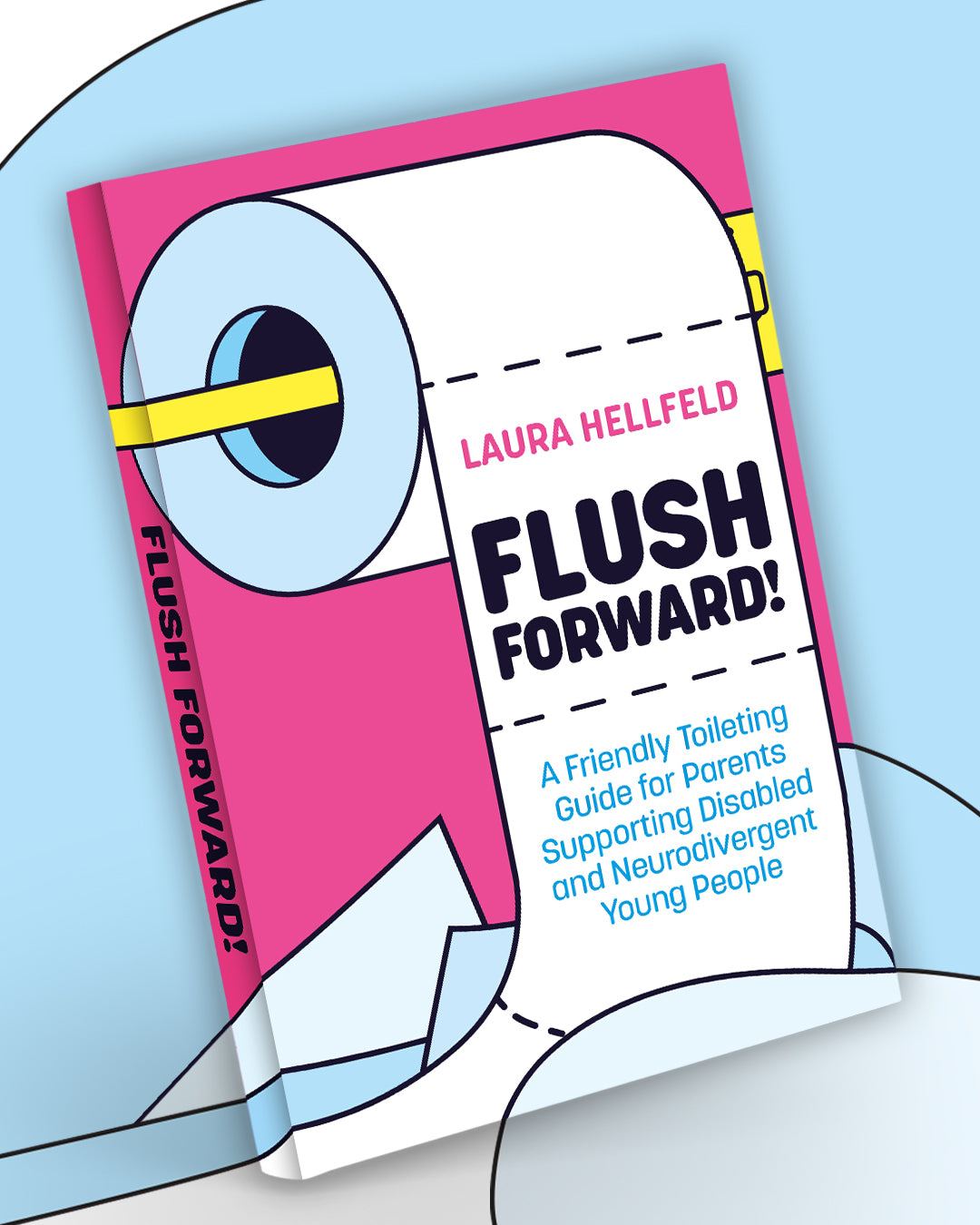
Flush Forward! The book for anyone caring for a young person or child who needs extra support with toileting
Find more tips and strategies to
• Increase your young person’s understanding and confidence
• Help them feel more in control of what’s
happening.
• Create chances to ask questions (this often reveals what’s been confusing or tricky so far).
• Support routines by adding predictability and reducing surprises.