Autism and Neurodiversity
Our support for the autism community goes back more than thirty years. We are immensly proud to have published so many incredible authors; from autistic individuals using their voices to help, support and advocate, to professionals imparting expertise about autism and ASC, as well as parents sharing their experiences and advice – all have created positive change in the autism community, and we are thrilled to share their works with you!
Our Most Loved Autism & Neurodiversity Books




Pathological Demand Avoidance (PDA)
-
What is PDA and how is it different from "normal" defiance?
PDA is widely thought of as a subtype or profile of autism that is characterised by high anxiety and an overriding need for autonomy. The main features of PDA include:
- Resisting and avoiding the ordinary demands of life. What is very important to understand about PDA is that demands may be avoided even when the person seems to want to do what has been suggested or asked.
- Using social strategies to avoid demands, such as distracting, giving excuses, flattery, procrastination and negotiation.
- Appearing sociable and having a strong social drive, but lacking depth in their understanding of social and communication skills.
- Excessive mood swings and impulsivity.
- The use of role-play and fantasy, sometimes used to an extreme extent to avoid or manage demands.
-

Books to Help Support Your PDA Child or Teen
Browse the handpicked booksFind resources to support your PDA child, teen, or yourself as a PDA adult.
-

Extract from The Parents' and Professionals' Simple Guide to PDA
Buy the book"An individual with PDA will experience demand avoidance about the things that they want to do as well as the things that they don't want to do due to the anxiety these demands cause, and therefore the demand avoidance can be seen as pathological and not rational. Remember, PDA is not about not wanting to do things. PDA is about not being able to do things."


Neurodiversity in the Workplace
What are the benefits of neurodiversity in the workplace?
With estimates that between 10 and 20 per cent of the population considered neurodivergent in some way, employers cannot claim neurodiversity does not exist. Yet many neurodivergent individuals report negative workplace experiences — many are unemployed or under-employed, and some have faced direct or indirect discrimination.
A key barrier is employer confidence: many lack knowledge about neurological conditions and are unsure what adjustments to make. One report found that 60 per cent of employers worry about getting support wrong and don't know where to find guidance (National Autistic Society 2016).
So why should managers care about creating more inclusive environments?
Meeting legal requirements
Neurodevelopmental conditions are protected as hidden disabilities under the Equality Act 2010. Failure to meet these requirements can result in legal action.
The business case
Utilising the full population creates a wider labour pool, more opportunity for innovation, a broader customer base, and a more positive company image.
More effective teams
As in sport, the most effective teams are built on diverse talents, not uniformity. A growing number of organisations recognise the skills neurodivergent individuals bring.
Creativity and innovation
Neurodivergent people think differently by definition — a neurodiverse team is more likely to approach problems from multiple perspectives. Major organisations including Amazon, Microsoft, Ford, Google, SAP and DXC Technology are already running neurodiversity-at-work programmes (CIPD 2018).
Addressing skills shortages
Many businesses face recruitment gaps, while neurodivergent individuals with the needed skills remain unemployed — often not because of the work itself but due to lack of workplace support. Adjustments are typically low-cost and straightforward to implement.
Customer engagement and trust
Customers are themselves a neurodiverse group. A business known to embrace difference will appeal to a wider audience than one that does not.
Improved wellbeing
Inclusive workplaces tend to have happier, healthier employees. When people feel comfortable, they are more productive, more satisfied, and more likely to stay — benefiting everyone.
The social justice case
Managers have a moral obligation to treat all employees fairly. In this view, fair treatment is right in itself — not simply because of the benefits it produces (Beardwell and Thompson 2014).
Extract from The Neurodiverse Workplace
How can employers create a neurodiverse workplace?


Making Your Practice Neurodivergent-affirming

Everyday Parenting with Neurodivergent Children


Learning, Education and Neurodiversity


ADHD & AuDHD
How can you stop procrastinating when you have ADHD?
- The stress factor — Think of stress as a magnifier: if you're already struggling with executive functioning skills, such as task prioritisation, organisation, or making decisions, stress tends to make those things feel even more challenging for your brain to do. Prioritising regulating our daily stress levels is essential, because it's going to affect so many other areas of our lives, including our ability to start and finish things we want to do.
- The self-talk factor — Our daily self-talk can impact our confidence in ourselves to do a task and our motivation to complete it. You can remember it like this: CRITICAL SELF-TALK + STRESS = PROCRASTINATION. Change the way you're talking to yourself, and you'll change how much stress you're feeling, and this can change your tendency to procrastinate as well.
- The support factor — Finding accountability and support may be the piece we are missing to get ourselves un-stuck and moving forward again. In a study on accountability undertaken at the American Society of Training and Development, 65% of participants completed their goal if they committed to doing it by telling a partner. When participants had a regular accountability appointment with this partner, 95% of them completed their goal (Oppong 2017).
From The Procrastination Playbook for Adults with ADHD by Risa Williams
How do you get the right support for your ADHD child?
There are six key principles to getting the right support in place:
- Understand your child's ADHD: First, it is important to help you as a parent accept the child that you have and that you really understand what ADHD is. Children with ADHD are unique and this means that their difficulties can be unique to them. Parents need to observe their child so that they can see which particular difficulties they are experiencing. (Chapter 2: Parenting a Child with ADHD – Principle 1, p. 31)
- Build a 'tool kit' of everyday strategies: This involves behaviour strategies; these have been developed taking into account the neuropsychological difficulties seen in some children with ADHD, for example short-term memory problems, difficulty with waiting, poor organizational skills and so on. (Chapter 2: Parenting a Child with ADHD – Principle 2, p. 32)
- Improve your child's attention through play: Assess your child's abilities, initially through play, in preparation for attention training to improve concentration, working memory, waiting and so on. Playing with your child has added benefits in that it can help you reform your relationship if things have been tough between you. (Chapter 2: Parenting a Child with ADHD – Principle 3, pp. 32–33)
- Help your child understand and control their emotions: Understanding that many children with behaviour difficulties associated with ADHD have a very 'short fuse' can help us to avoid some potential pitfalls. It is important to know that these outbursts are not deliberate but part of the child's innate emotional make-up, which they did not choose! (Chapter 2: Parenting a Child with ADHD – Principle 4, pp. 33–34)
- Share what works with others: Having practised all the principles yourself, usually at home, the important skill is to share these with other people involved in the care of your child and to practise them outside the home. Principle five also includes making sure that everyone (the whole system) involved in caring for your child understands what is needed to help them succeed, despite their ADHD difficulties, and becomes their advocate – educating others about your child and their needs is key to this. (Chapter 2: Parenting a Child with ADHD – Principle 5, pp. 34–35)
- Know when to ask for help: If the situation is very difficult, and you are struggling to cope, seek support from people you trust. This could be a close friend or relative or a professional. Health visitors, school nurses or your doctor can advise you or point you in the direction of someone willing to and qualified to help. Don't be afraid to ask. (Step 6: Times Ahead – Skill 2: Seeking help when you need it, p. 149)
From Parenting a Child with ADHD by
Why Do AuDHDers Swing Between Sensory Overload and Boredom?
"Many AuDHDers experience something called a narrow window of tolerance, which basically means that we are both easily overstimulated and easily understimulated. We need a very precise amount of stimulation to feel comfortable in our own skin. Overstimulation is most commonly caused by autistic sensory sensitivities… Understimulation is most commonly caused by the ADHD need for more stimulation than a non-ADHDer… If you're both autistic and ADHD and you are prone to both over- and understimulation, it can feel impossible to actually be comfortable. It's a precarious game, seeking stimulation, but not too much, and of course it has to be the right kind of stimulation in order to really scratch that itch."
From Welcome to AuDHD by Megan Griffith.

Dyslexia, Dyspraxia and Dyscalculia
What are the signs a child has dyscalculia or maths difficulties?
Dyscalculia is a condition that affects the ability to acquire mathematical skills. Dyscalculic learners may have difficulty understanding simple number concepts, lack an intuitive grasp of numbers and have problems learning number facts and procedures. Even if they produce a correct answer, or use a correct method, they may do so mechanically and without confidence. We need to remember that there is often a big difference between what children can repeat or chant and what they understand and thus be very wary of an over-dependence on rote learning. The skill of estimation is not a natural one for many learners.The answer to my question, 'At what age are enough children giving up on maths in class for it to be noticeable?' varies, of course, but the most frequent answer I get is 'seven years old.' Some of the factors blocking learning include: having to do maths calculations quickly; (rote) learning facts and procedures (without understanding them); the extremely judgemental nature of maths — an answer is right, or it is wrong; the inconsistencies in early arithmetic confuse children, making bigger challenges on memory and blurring concepts; being asked to do tasks that are beyond the capacity of the child's working and short-term memories; the vocabulary and language of early maths is often everyday vocabulary and language, but then it is used in a maths setting (for example, 'take away' means 'subtraction').If the number of steps they use or plan to use exceed their working memory capacity, then they will fail at the task. If that makes them anxious then the problem gets worse, because anxiety can depress the capacity of working memory even further.
What is maths anxiety?
Beyond any other school subject, maths anxiety is a big problem. It's not just when doing maths, it's often the anticipation of doing maths. Recent neurological research has shown that the area of the brain that is activated when maths anxious children are anticipating doing maths is the same bit that is activated when anticipating physical harm. Some other factors contributing to maths anxiety are: a poor understanding of maths, often resulting in helplessness; a poor long-term memory for maths facts and procedures (and no effective way to compensate); constant experience of underachievement or failure (the student becomes 'helpless', thinking, 'I'm no good at this, never will be and you can't help me').
How do you support a dyslexic child to build confidence?
"One way of supporting the development of self-esteem and helping to minimise anxiety is to focus on strengths. We are all good at something. Sadly, the dyslexic child often gets to believe that there is nothing they can get right. Children will always do well if they can. They do poorly when life demands skills that they are lacking. That is the fault of the way they are being taught, not a deficit in the child.Help your child to talk about their problems and feelings. This helps them to start being familiar with how they react in given situations and what the options might be. Next, we need to help them build some coping skills. Work with your child to learn skills to problem solve. Challenge any negative thinking with an enquiry. Nothing is more fearful than feeling powerless and in this way we help our children to realise their strengths, even if they are not the ones that get perfect grades in tests.Build on the individual's strengths and interests. It can help shore up their self-esteem and resilience when they are finding other stuff difficult. It can help turn, 'I'm stupid and worthless' into, 'This thing is difficult right now.'If your child finds it hard to think of personal strengths, here is a list that may prompt them to think differently:
- innovative and imaginative thinker
- good visualisation and spatial skills
- often creative – good sense of colour and texture, may excel at art, design and photography
- thinks in pictures, which is quicker and more multi-directional than thinking in words
- good verbally
- can be very humorous
- holistic – sees the whole picture
- intuitive problem solver
- often hard working and tenacious
- high emotional intelligence, empathetic
- entrepreneurial
- doggedly determined.
Role models can help raise young people's aspirations and show that dyslexia is not going to be the thing that stops them succeeding. There are hundreds of famous examples, but a role model could just as easily be a teacher or family member. The benefit of seeing that 'someone who is like me' has been successful cannot be underestimated.Involve yourself in their hobbies. Do the activity with them. Be the bystander rooting for them. This helps your child to develop autonomy. Allow them to make their own decisions. This, in turn, helps them to build resilience so they are able to bounce back when the world knocks them down, knowing they will survive and thrive and be back to fight another day.Remember that praise is what dyslexic children thrive on."
Extract from Parenting a Dyslexic Child, edited by Gillian Ashley.


Our full range
Dive deeper and explore our full range of books across all neurodiversity
-
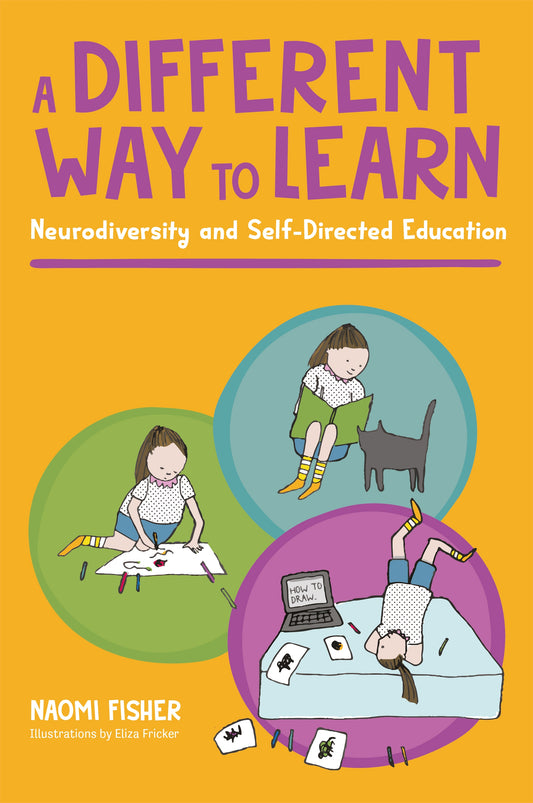
A Different Way to Learn
Regular price £16.99Regular priceUnit price per -
I'm Not Upside Down, I'm Downside Up
Regular price £10.99Regular priceUnit price per -
The Panda on PDA
Regular price £13.99Regular priceUnit price per -
The Autistic Survival Guide to Therapy
Regular price £16.99Regular priceUnit price per -
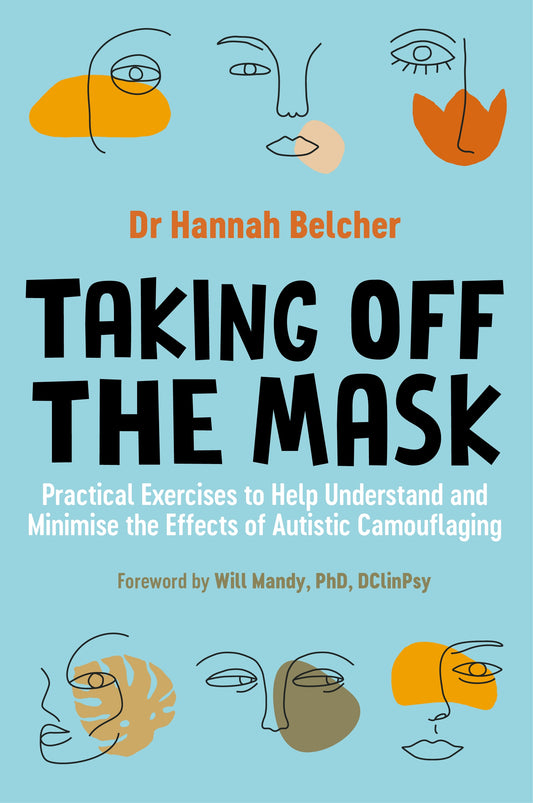
Taking Off the Mask
Regular price £16.99Regular priceUnit price per -
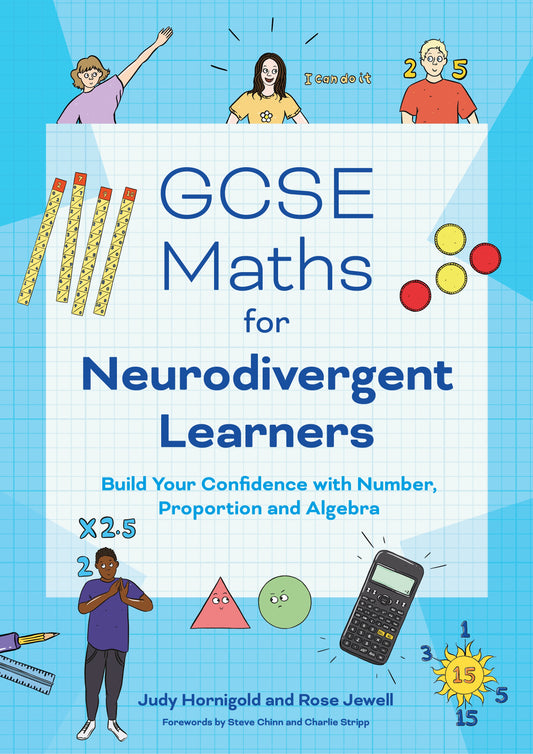
GCSE Maths for Neurodivergent Learners
Regular price £25.99Regular priceUnit price per -
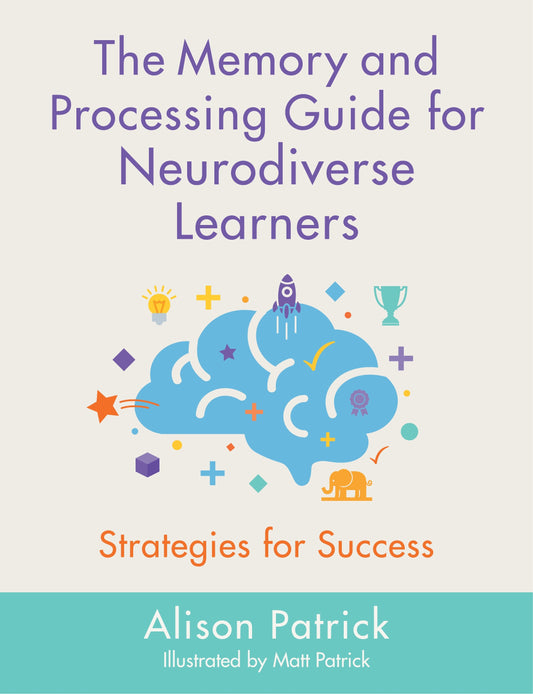
The Memory and Processing Guide for Neurodiverse Learners
Regular price £20.99Regular priceUnit price per -
The Educator’s Experience of Pathological Demand Avoidance
Regular price £15.99Regular priceUnit price per -
Under the Radar
Regular price From £14.99Regular priceUnit price per -
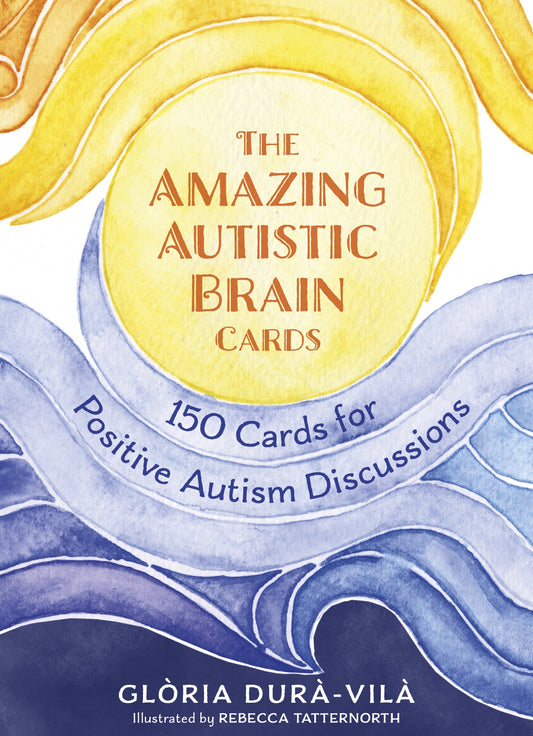
The Amazing Autistic Brain Cards
Regular price £20.99Regular priceUnit price per